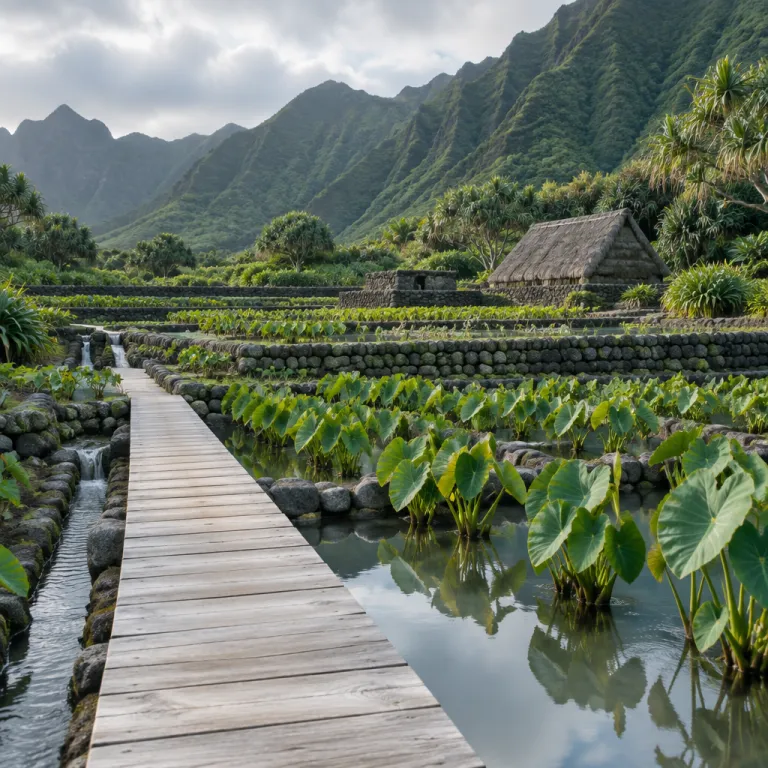
Limahuli garden Kauai as a living north shore ahupuaa
Limahuli garden Kauai sits at the end of the road, where the north shore narrows into cliffs and sea. This is not a manicured botanical attraction but a living garden preserve in Limahuli Valley, part of the National Tropical Botanical Garden network that treats culture and ecology as one story. For a luxury traveler used to polished resort paths, the first view of this garden and its terraced loʻi kalo feels like stepping into an older, quieter Hawaiʻi.
The setting in Hāʻena on Kauai’s north shore places Limahuli between emerald ridges and the curve of the Pacific, with the valley rising steeply behind the visitor center. Here the preserve protects one of the most biodiverse valleys in Hawaiʻi, where native Hawaiian plants, Polynesian introduced crops and archaeological complexes still sit within a functioning ahupuaa system. You walk through a botanical garden, but you are also walking through a Hawaiian place that has been cultivated for at least fifteen centuries.
Limahuli Garden and Preserve belongs to the National Tropical Botanical Garden, which also stewards McBryde Garden and Allerton Garden on the south side of the island. That national tropical mandate means Limahuli is managed not as a simple park but as a research level garden preserve with ArbNet Level 4 accreditation and a Charity Navigator four star rating. For travelers choosing the best things to do beyond the beach, that level of care signals a site where your time and your attention genuinely support native ecosystems.
Walking the loop trail: a short climb into deep time
The core experience at Limahuli garden Kauai is a loop trail of roughly 1.2 kilometers, with about 60 meters of incline and several sets of stairs. It is short in distance yet long in narrative, guiding each visitor past taro terraces, lava rock walls and carefully signed collections of native Hawaiian plants that anchor the story of the valley. You move slowly not because the trail is difficult, but because every turn reveals another layer of how this island has been tended.
Self guided visits begin at the visitor center, where you receive a printed guide that matches numbered stops along the trail and explains the role of each plant and terrace. The path climbs above the garden preserve to viewpoints where the north shore surf, the Hāʻena State Park coastline and the ridges of Limahuli Valley line up in a single frame. On clear days, the contrast between the tropical botanical plantings and the wild upper slopes of the preserve shows why this valley is considered one of the last easily accessible places with intact archaeological complexes and native forest.
Guided tours add another dimension, especially for solo travelers who want context rather than just scenery. A guided tour with a trained guide weaves in stories of native Hawaiian land management, the ahupuaa system and how specific Hawaiian plants were used for food, medicine and ceremony. If you are building a slow north shore itinerary around food and agriculture, pair your Limahuli time with a morning at a cacao estate such as the award winning chocolate farm described in this Kauai chocolate farm experience for a full day of living botanical heritage.
Guided visits, cultural depth and how to plan your time
Limahuli garden Kauai offers both self guided entry and scheduled guided tours, each shaping the visit differently. The self guided option suits independent travelers who like to linger at certain plants, photograph the terraces or sit quietly where the stream bends through the garden preserve. A guided tour, by contrast, compresses more cultural and ecological insight into the same trail, making it one of the best things to book if you have limited time on the north shore.
Group guided tours, generally for visitors aged thirteen and older, follow the same loop trail but pause more deliberately at features such as the loʻi kalo, the reconstructed hale and the upper viewpoints over Hāʻena State Park. Specialist options, such as the lāʻau lapaʻau traditional medicine tour, focus on how native Hawaiian practitioners use specific Hawaiian plants within healing traditions that still live in Limahuli Valley. These guided tours underline that Limahuli is not a generic botanical garden but a place where descendants of the valley’s original community still help tend the land.
Because access is limited and the preserve is sensitive, advance reservations are strongly recommended, especially in busier seasons when the north shore feels full. Check the National Tropical Botanical Garden booking platform before you drive, and use Google Maps to confirm current travel times because the single road through Hāʻena State can slow unexpectedly. If you are staying elsewhere on the island and planning a rainy season trip, this detailed guide to luxurious stays during Kauai’s wetter months helps you align Limahuli with flexible spa days and indoor dining.
Pairing Limahuli with luxury stays across the island
For luxury travelers, Limahuli garden Kauai becomes a north shore anchor around which to design a slower, more intentional stay. Base yourself in a high end property in Princeville or Hāʻena, then treat the garden preserve as a morning ritual rather than a rushed stop between beaches. The short trail and compact visitor center make it easy to combine with an afternoon at Hāʻena State Park or a sunset dinner overlooking the reef.
If you are staying on the south shore, consider structuring a two center itinerary that links Limahuli with the National Tropical Botanical Garden’s McBryde Garden and Allerton Garden near Poʻipū. Those southern gardens showcase different collections of tropical botanical species, sculpture and coastal landscapes, while Limahuli focuses on native Hawaiian plants and the intact ahupuaa of Limahuli Valley. A stay at a cinematic oceanfront estate, such as the property profiled in this guide to a south shore beach house estate, pairs well with a dedicated day trip north.
Travelers who split time between Kauai and the Big Island often remark on how different the two islands feel, even though both belong to Hawaiʻi. The Big Island offers volcanic drama and wide open lava fields, while Kauai’s north shore, and Limahuli in particular, deliver a more intimate sense of enclosure within steep green walls. Experiencing both islands, and both styles of botanical garden, gives you a fuller sense of how varied native Hawaiian landscapes and cultural practices can be across the archipelago.
Respecting a cultural landscape, not just a scenic park
Limahuli garden Kauai asks visitors to arrive as guests in a cultural landscape, not as tourists ticking off another park. The preserve protects archaeological sites, stone terraces and a pristine stream, and it functions as a living classroom for native Hawaiian stewardship rather than a recreational state park. That means staying on the trail, keeping voices low and treating every terrace and planting as part of someone’s ancestral home.
Staff and guides often explain how the ahupuaa system once linked the upland forest, the cultivated valley and the reef in a single managed unit, with each zone feeding and protecting the others. When you stand on the upper part of the trail and look down over the loʻi, the visitor center and the curve of the north shore, that integrated vision becomes tangible. You see why this garden preserve is described as one of the last easily accessible valleys where native forest, archaeological complexes and living community stewardship still coexist.
Respect also extends to how you talk about the place when you leave, especially online. Use accurate names such as Limahuli Garden and Preserve, Hāʻena State Park and National Tropical Botanical Garden when you share images or reviews, so other travelers understand that this is more than a generic botanical garden on an anonymous island. When you mark the location on Google Maps, choose the official listing rather than a vague pin, helping future visitors arrive with the right expectations and the right level of care.
Practical notes for the solo luxury explorer
For solo travelers, Limahuli garden Kauai offers a rare combination of accessibility, depth and safety. The loop trail is compact, well signed and maintained, making it manageable for most visitors with moderate fitness, while the incline and stairs still provide a sense of physical engagement. Plan at least two hours for your visit so you can move slowly, read the interpretive guide and sit quietly at one or two favorite spots.
Weather on the north shore can shift quickly, and the valley catches showers that keep the plants lush and the stream flowing. Light rain gear, sturdy shoes and a small daypack are more useful here than resort sandals, especially when the trail is damp and the stone steps are slick. Because this is a preserve rather than a typical park, there are no food concessions inside the garden, so bring water and a small snack, then plan lunch in Hanalei or back at your hotel.
Navigation is straightforward, with Google Maps directing you along the single coastal road through Hāʻena State toward the end of the island’s north shore. Parking is limited at the garden preserve, which is another reason to secure reservations and arrive on time for any guided tour you have booked. Treat the journey out as part of the experience, watching how the landscape tightens from resort edges to taro fields to the steep walls of Limahuli Valley, where a whole Hawaiian world is still carefully tended.
FAQ
How long does it take to walk the Limahuli trail ?
The main loop trail at Limahuli Garden and Preserve is roughly 1.2 kilometers with about 60 meters of elevation gain. Most visitors spend between 1.5 and 2 hours on the trail, allowing time to read the interpretive guide and pause at viewpoints. Faster walkers can complete it more quickly, but the experience is richer when you move slowly.
Is Limahuli suitable for all fitness levels ?
The trail includes stairs, uneven stone surfaces and a steady incline, so it suits visitors with moderate fitness and stable mobility. It is not a flat park path, and those with knee or balance issues should use caution and consider walking poles. Children who are comfortable with short hikes usually manage well under adult supervision.
Do I need a reservation to visit Limahuli garden Kauai ?
Advance reservations are strongly recommended because daily visitor numbers are limited to protect the garden preserve. Same day walk in entry is sometimes available but cannot be relied upon, especially during busier travel periods. Booking ahead also ensures you can secure a spot on any guided tour that interests you.
How is Limahuli different from other botanical gardens on Kauai ?
Limahuli focuses on native Hawaiian plants, Polynesian introduced crops and the intact cultural landscape of Limahuli Valley. McBryde Garden and Allerton Garden on the south shore showcase broader tropical botanical collections, sculpture and coastal design. Many travelers visit all three to understand how National Tropical Botanical Garden stewards different facets of Hawaiʻi’s natural and cultural heritage.
Can I combine a visit to Limahuli with a beach day nearby ?
Yes, many visitors pair a morning at Limahuli with time at Hāʻena State Park or nearby north shore beaches. Because parking and access at coastal areas are also managed, it is wise to coordinate reservations and timing in advance. This combination offers both cultural immersion in the garden and relaxation by the sea in a single day.